About Guelph Hood Cleaning
Guelph Hood Cleaning is the front door to a commercial kitchen exhaust crew serving Guelph and Wellington County, and it runs on a three-part promise: one number, one crew, one certificate. The number is 226-641-5901. The crew is Power Hoods Systems, the operating company that does every walk-through, every overnight visit and every rooftop fan check. The certificate is a signed health and safety document referencing the published NFPA 96 standard, delivered with before-and-after photographs of every surface cleaned. This page explains the arrangement, the paperwork and what a kitchen manager anywhere from Puslinch to Mount Forest can expect from the first call onward.
How the business works
One number, one crew, one certificate, in that order.
One number. Every call to 226-641-5901 and every submission from the quote form lands in a single schedule. A pizzeria on Macdonell Street, a franchise on Clair Road, a church hall in Elora and a plant cafeteria in the Northwest Industrial Park are all booked from that one list, and the person who answers can see the overnight calendar while you are on the line.
One crew. Power Hoods Systems performs the work. Guelph Hood Cleaning is the name on the phone and the form; Power Hoods Systems supplies the technicians, the equipment, the walk-through and the signature on the certificate. That is written here in plain terms because a kitchen manager is entitled to know whose crew is in the building at two in the morning, and the answer on the phone is the same as the answer on this page.
One certificate. A church board in Fergus, a franchise head office, a facilities manager at the University of Guelph and a Guelph Fire Department inspector all receive the same signed document and the same photographs. There is no lighter version for a small kitchen and no heavier one for a large one.
Scheduling is overnight and between services, so a dining room on Wyndham Street is never dark at dinner and a hospital kitchen is never dark at breakfast. Pricing is published near the foot of this page rather than held back for the call.
The documentation standard
Three things arrive with every job in Guelph and Wellington County. None of them is an extra.
Before-and-after photographs of every cleaned surface. A clean canopy face is not evidence, because the closing cook wipes it every night. Paired photographs of the plenum, the filter slots, the inside of the duct and the fan housing are evidence, because they show the filters came out and someone went in behind them. The photographs travel with the certificate, not on request.
A signed health and safety certificate. The certificate references the published NFPA 96 standard and records the date and the sections cleaned. Guelph Hood Cleaning and its operating crew reference the published NFPA 96 standard and are not affiliated with NFPA. What the certificate does and does not assert, and how the Guelph Fire Department and Centre Wellington Fire Rescue read it, is on the NFPA 96 page.
Proof of WSIB coverage and liability insurance before work starts. The proof goes out with the written quote, not after the visit. A plant safety officer in the Hanlon Creek Business Park, a property manager for a Stone Road plaza or a church treasurer in Arthur should never have to ask for it at the door.
What to expect from a visit
The outline holds for a pizzeria on Carden Street, a legion hall in Mount Forest or a campus dining line on Gordon Street.
Before the night. The first call covers what the line cooks, how many canopies hang over it and which hours the kitchen is dark. A free walk-through follows, and the technician names anything that cannot be reached before it turns into a surprise on the invoice. The written quote is back within 24 hours with the scope, the price and any item that needs separate approval. The contact page lists what to have ready for the call, including who holds the roof key.
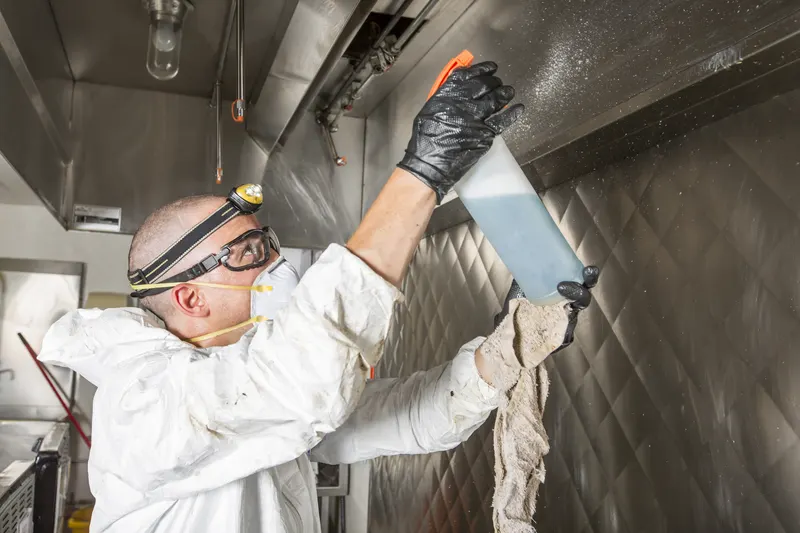
The night. The crew arrives after the last cook leaves or in the gap between services. Equipment and floors are covered before any product is opened. The work runs from the canopy up to the fan, and each surface is photographed before and after. A church hall with nobody on site overnight is handled by arrangement with a key holder, and the details of that are on the contact page.
After. The photographs and the signed certificate follow the visit. Keep them together. An inspector, an insurer, a franchise office or a board can ask for them at any time, and the next visit date is set from what the photographs show rather than from a standing calendar. The published intervals by cooking volume are on the NFPA 96 page.
Top-rated hood cleaning company in Guelph: what to check before booking
The checks are the same ones this page invites you to run on Guelph Hood Cleaning.
Ask who performs the work, and expect a company name in reply, not a shrug. Ask whether the photographs include the inside of the duct and the fan housing, not only the canopy. Ask whether the insurance proof arrives before the visit. Ask whether the certificate lists sections and a date. Ask whether the interval is set from what the kitchen cooks or from a contract template. A company that answers all five without hesitation is worth a walk-through. The four scopes that walk-through can lead to are on the services page, and the kinds of kitchen it is most often booked for are on the who we serve page.
No founding year, crew count, truck count, review total or star rating appears on this page. Those are the figures most often stretched in this trade, so this page carries none of them. What it carries instead is a published price, a documentation standard you can hold the crew to, and a phone number that gets answered.
How much does hood cleaning cost in Guelph in 2026?
Guelph Hood Cleaning prices a single-hood kitchen up to ten feet from $585 per visit and a multi-hood kitchen of two to four canopies from $995 per visit, with larger systems quoted on site after a free walk-through and a written quote back within 24 hours.
Fan repair, deep cleaning and solid-fuel appliances are quoted per job after inspection or walk-through, with no figure published because no two roofs or wood ovens are alike. The communities inside the coverage line, and why Guelph and Wellington County run as one overnight territory, are on the areas served page. Centre Wellington has its own Fergus and Elora page.
Next step: call 226-641-5901 or request a written quote. Say what the line cooks, how many canopies it has and when the kitchen is dark. That is enough to book the walk-through.
About Guelph Hood Cleaning: frequently asked questions
Who actually shows up to clean the hood?
Power Hoods Systems, the operating crew. Guelph Hood Cleaning is the name on the phone and the quote form, and Power Hoods Systems supplies the technicians, the equipment, the walk-through and the signature on the certificate. The arrangement is identical on every job from Puslinch to Mount Forest.
Why is there no founding year or star rating on this page?
Every claim on this page should be one you can check by phone or on paper. Years in business, truck counts and review totals are the numbers most often inflated in this trade, so none of them is printed here. The published price, the documentation standard and the phone number are the claims that matter.
Are there customer names or testimonials?
No. Kitchens across Guelph and Wellington County use this service, including pizzerias, franchise lines, churches, a legion branch, a food bank, a retreat centre, a contract caterer, breweries and food trucks, and none is named because none has given permission. Naming the segment is honest. Printing a name without asking is not.
Does the insurance proof arrive before or after the visit?
Before. Proof of WSIB coverage and liability insurance goes out with the written quote so the contractor file at a plant, a hospital or a property management office is complete before the crew is on site. Nobody should have to ask for it at the door.
Does the kitchen have to close for the visit?
No. Scheduling is overnight and between services. The crew arrives when the last cook leaves or in the gap between lunch and dinner, and it is gone before the first prep cook is in. A kitchen that cannot go dark for a full day, such as a hospital or a campus residence, is worked in the gap between dinner clean-down and breakfast.